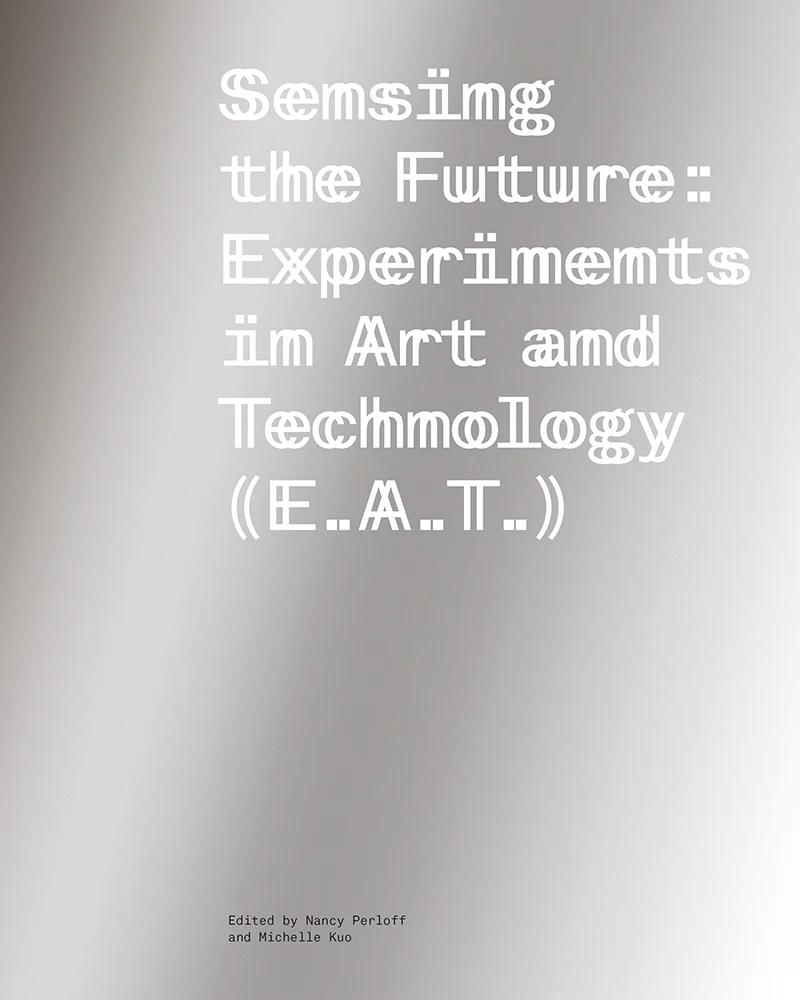
Sensing the Future: Experiments in Art and Technology (E.A.T.)
Edited by Nancy Perloff and Michelle Kuo
In the 1960s and '70s, collaborations between artists and engineers led to groundbreaking innovations in multisensory performance art that continue to resonate today.
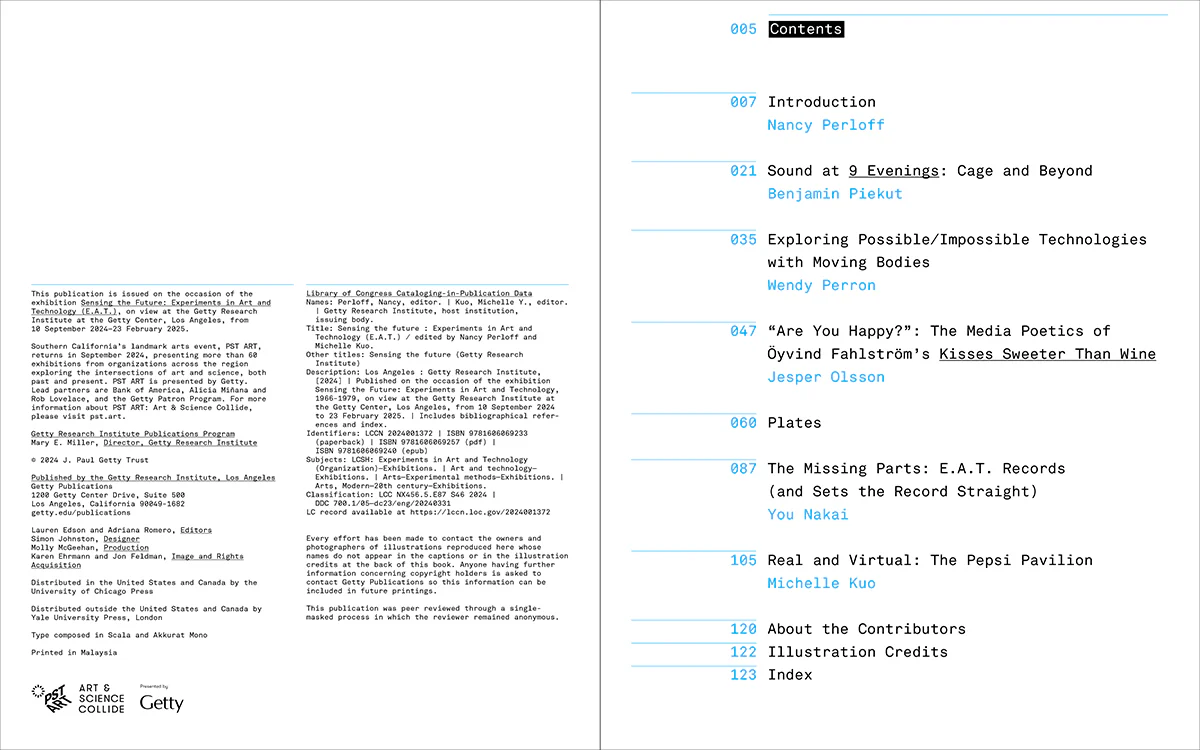
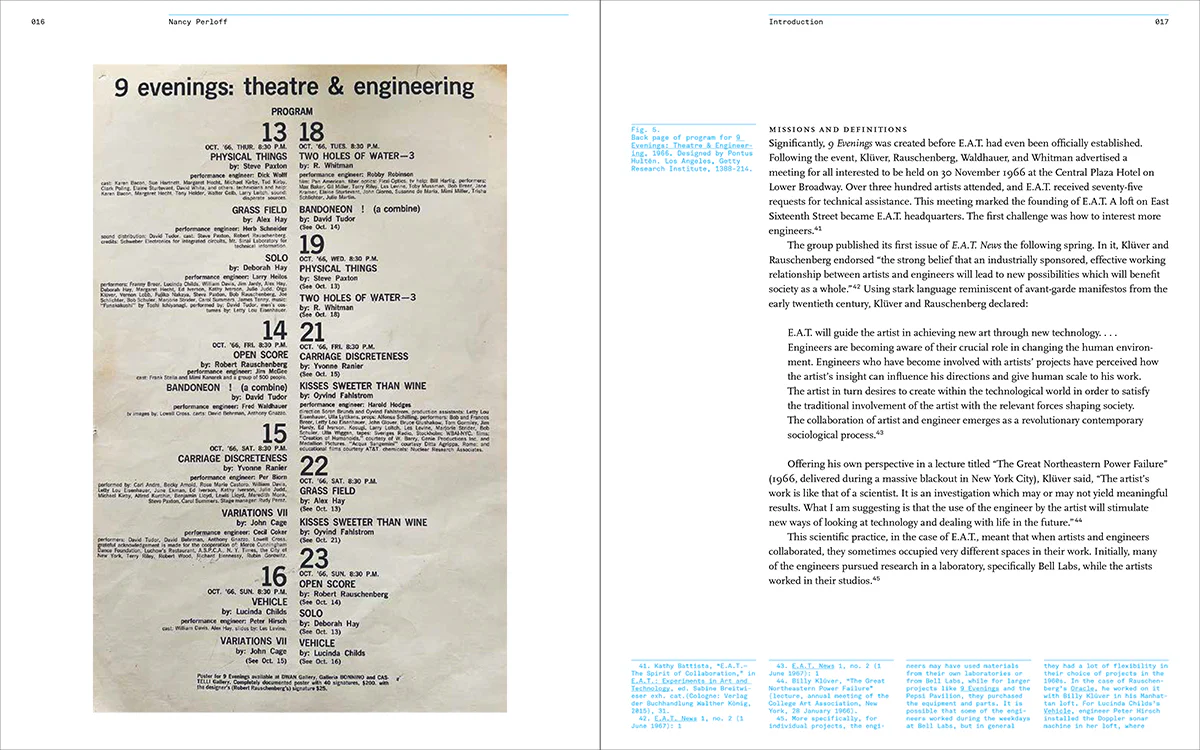
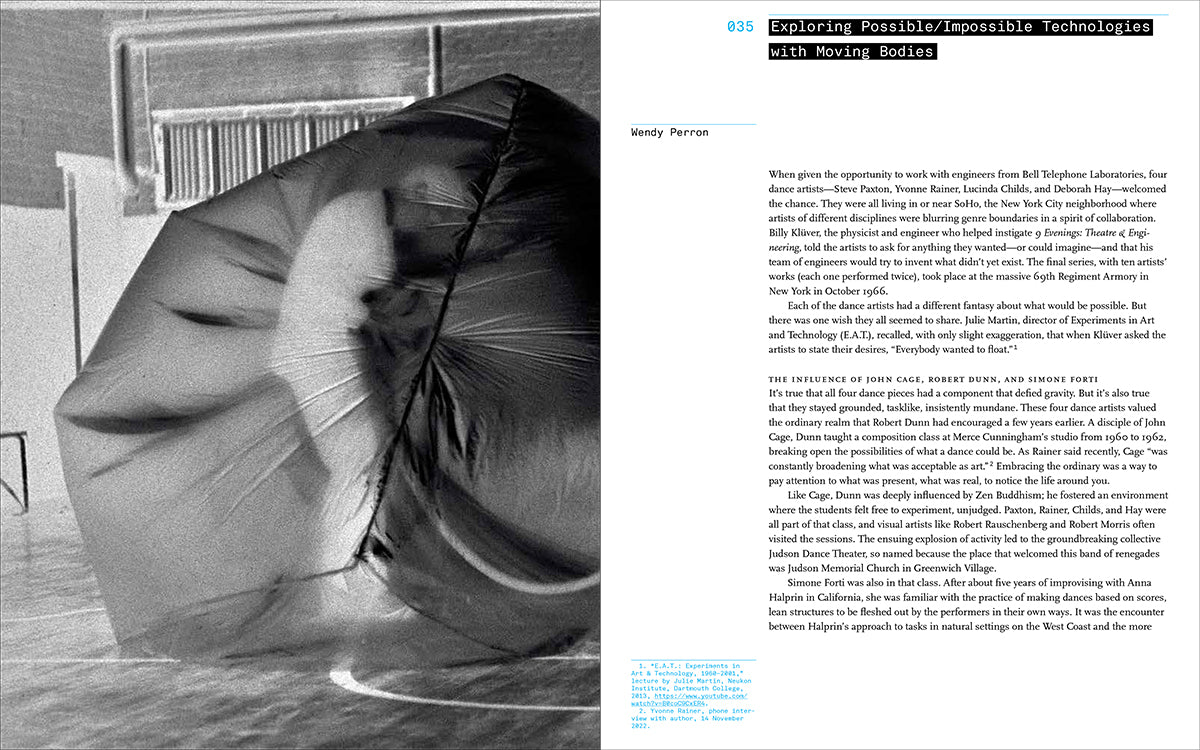
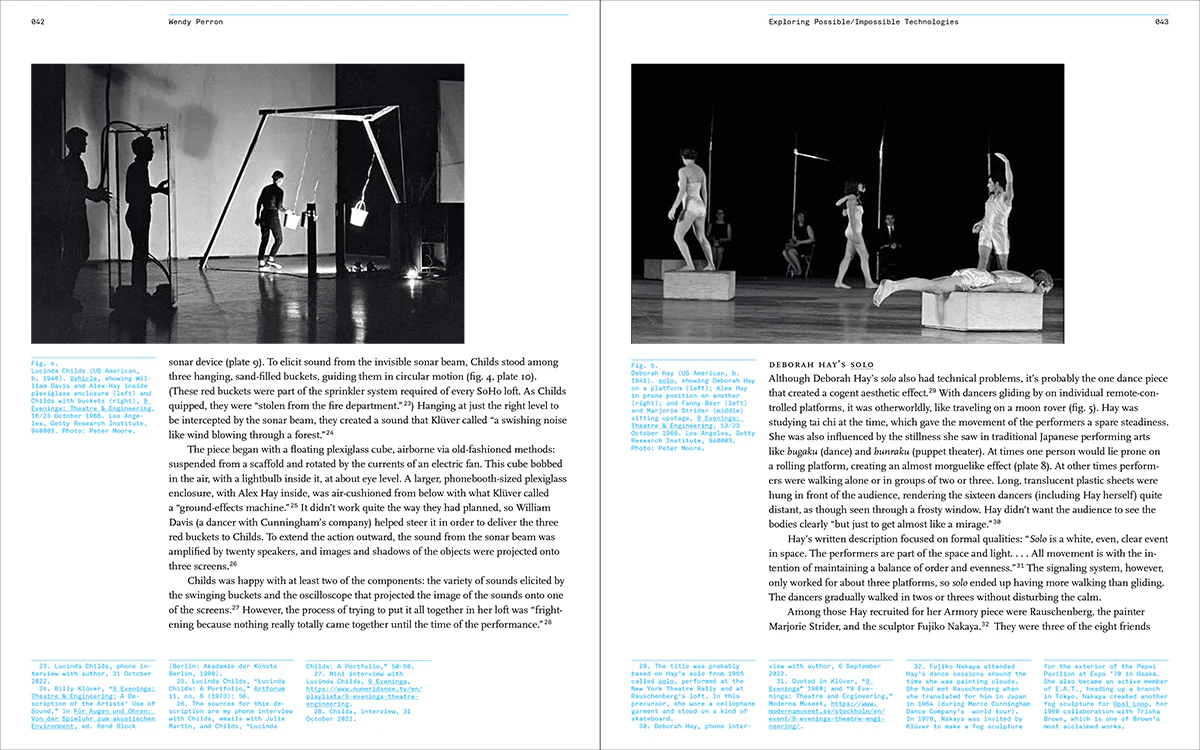
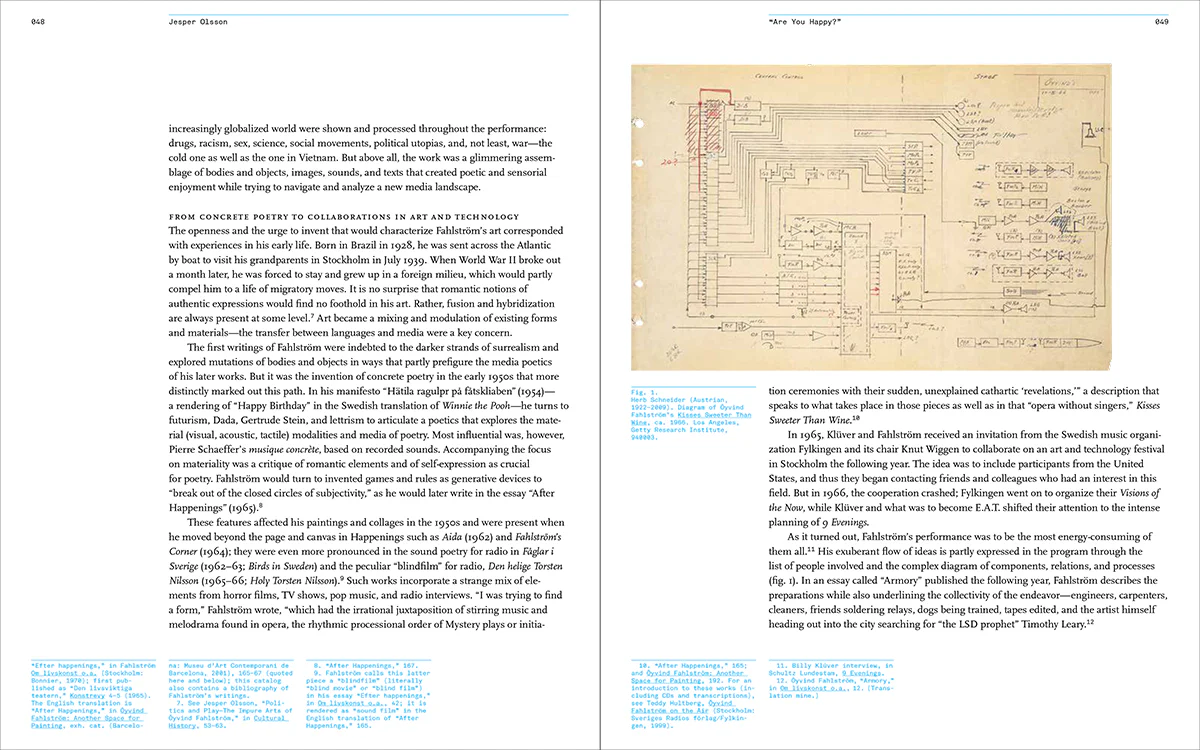
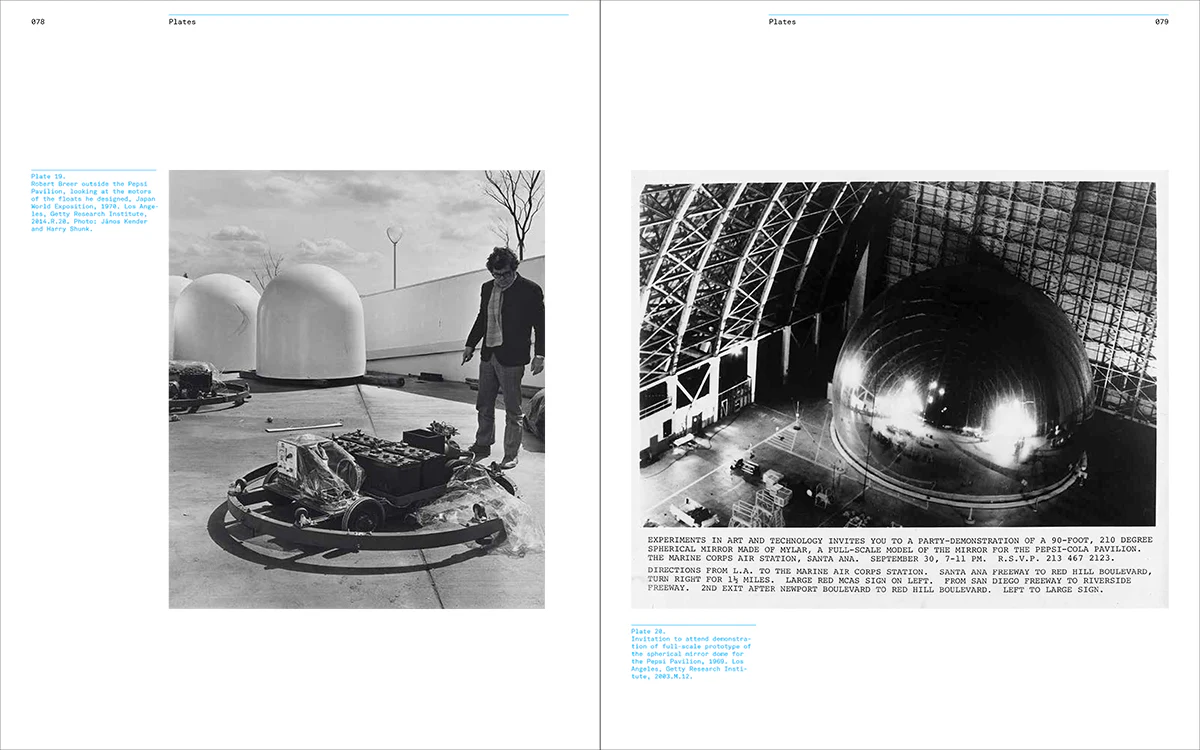
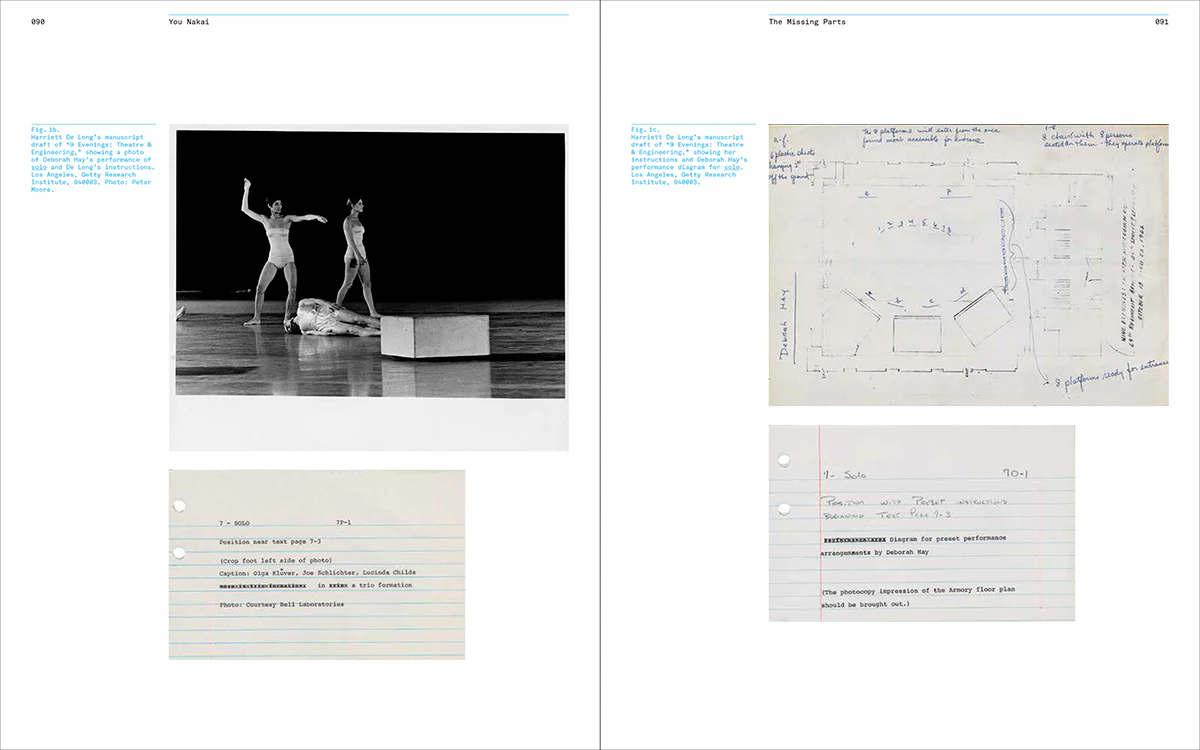
In 1966, Billy Klüver and Fred Waldhauer, engineers at Bell Labs in Murray Hill, New Jersey, teamed up with artists Robert Rauschenberg and Robert Whitman to form a nonprofit organization, Experiments in Art and Technology (E.A.T.). E.A.T.’s debut event, 9 Evenings: Theatre & Engineering, integrated art, theater, and groundbreaking technology in a series of performances at the 69th Regiment Armory in Manhattan. Its second major event, the Pepsi Pavilion at Expo ’70 in Osaka, Japan, presented a multisensory environment for the first world exposition held in Asia. At these events, and in the hundreds of collaborations E.A.T. facilitated in between, the participants—including John Cage, Lucinda Childs, Deborah Hay, Steve Paxton, Yvonne Rainer, and David Tudor—imagined innovative ways for art and science to intersect and enrich society.
Sensing the Future tells the story of these collaborations between artists and engineers and how they led to new installations and technology-based artworks. Through the examination of films, photographs, diagrams, and artists’ records from the E.A.T. archive at the Getty Research Institute, this volume provides a new perspective on multimedia art in the 1960s and ’70s and highlights the ways E.A.T. pushed the role of the artist beyond the traditional art world.
This volume is published to accompany an exhibition on view at the Getty Research Institute at the Getty Center from September 10, 2024, to February 23, 2025.
Nancy Perloff is curator of modern and contemporary collections at the Getty Research Institute. Michelle Kuo is chief curator at large and publisher at the Museum of Modern Art, New York.
“Sensing the Future is rich in images . . . providing vivid visual insight into E.A.T.’s fascinating inner workings through the inclusion of film stills, photographs, drawings, diagrams, and event ephemera.”
—Maggie Murphy, ARLIS/NA
“Sensing the Future: Experiments in Art and Technology explores a largely ignored conceptual and material transformation of the arts in the 1960s. Framed by nine performances at the New York Armory in October 1966 and the Pepsi Pavilion at Osaka’s Expo ’70, it focuses on the imaginative collaborations of engineers, especially Bell Labs’s visionary Billy Klüver, with artists, composers, and dancers—among them Tinguely and Rauschenberg, Cage and Tudor, Hay and Rainer. Through the examination of works that grew out of technological innovations and engaged the senses, editors Nancy Perloff and Michelle Kuo conclude that these experiences suggested the ‘future of modern society’ as ‘contingent, shifting, and open-ended’.”
—Jann Pasler, Distinguished Professor, University of California, San Diego
“Clear-eyed and clear-eared insights by scholars at the very top of their topics, and beautifully designed and illustrated with archival treasures from the Getty Research Institute, Sensing the Future is an indispensable document on Experiments in Art and Technology, and on key events of the period in art, music, dance, performance, and everything in-between.”
—Douglas Kahn, author of Earth Sound Earth Signal: Energies and Earth Magnitude in the Arts
“This book presents multifaceted scholarly investigations of an organization that was committed to collaborations among artists, engineers, and scientists, but it was also an organization that continued to reinvent itself as it seized new opportunities to change society and the future.”
—Julie Martin
128 pages
8 x 10 inches
28 color and 38 b/w illustrations
ISBN 978-1-60606-923-3
paperback
Getty Publications
Imprint: Getty Research Institute
2024
More Images
Sensing the Future: Experiments in Art and Technology (E.A.T.)
Edited by Nancy Perloff and Michelle Kuo
In the 1960s and '70s, collaborations between artists and engineers led to groundbreaking innovations in multisensory performance art that continue to resonate today.
In 1966, Billy Klüver and Fred Waldhauer, engineers at Bell Labs in Murray Hill, New Jersey, teamed up with artists Robert Rauschenberg and Robert Whitman to form a nonprofit organization, Experiments in Art and Technology (E.A.T.). E.A.T.’s debut event, 9 Evenings: Theatre & Engineering, integrated art, theater, and groundbreaking technology in a series of performances at the 69th Regiment Armory in Manhattan. Its second major event, the Pepsi Pavilion at Expo ’70 in Osaka, Japan, presented a multisensory environment for the first world exposition held in Asia. At these events, and in the hundreds of collaborations E.A.T. facilitated in between, the participants—including John Cage, Lucinda Childs, Deborah Hay, Steve Paxton, Yvonne Rainer, and David Tudor—imagined innovative ways for art and science to intersect and enrich society.
Sensing the Future tells the story of these collaborations between artists and engineers and how they led to new installations and technology-based artworks. Through the examination of films, photographs, diagrams, and artists’ records from the E.A.T. archive at the Getty Research Institute, this volume provides a new perspective on multimedia art in the 1960s and ’70s and highlights the ways E.A.T. pushed the role of the artist beyond the traditional art world.
This volume is published to accompany an exhibition on view at the Getty Research Institute at the Getty Center from September 10, 2024, to February 23, 2025.
Nancy Perloff is curator of modern and contemporary collections at the Getty Research Institute. Michelle Kuo is chief curator at large and publisher at the Museum of Modern Art, New York.
“Sensing the Future is rich in images . . . providing vivid visual insight into E.A.T.’s fascinating inner workings through the inclusion of film stills, photographs, drawings, diagrams, and event ephemera.”
—Maggie Murphy, ARLIS/NA
“Sensing the Future: Experiments in Art and Technology explores a largely ignored conceptual and material transformation of the arts in the 1960s. Framed by nine performances at the New York Armory in October 1966 and the Pepsi Pavilion at Osaka’s Expo ’70, it focuses on the imaginative collaborations of engineers, especially Bell Labs’s visionary Billy Klüver, with artists, composers, and dancers—among them Tinguely and Rauschenberg, Cage and Tudor, Hay and Rainer. Through the examination of works that grew out of technological innovations and engaged the senses, editors Nancy Perloff and Michelle Kuo conclude that these experiences suggested the ‘future of modern society’ as ‘contingent, shifting, and open-ended’.”
—Jann Pasler, Distinguished Professor, University of California, San Diego
“Clear-eyed and clear-eared insights by scholars at the very top of their topics, and beautifully designed and illustrated with archival treasures from the Getty Research Institute, Sensing the Future is an indispensable document on Experiments in Art and Technology, and on key events of the period in art, music, dance, performance, and everything in-between.”
—Douglas Kahn, author of Earth Sound Earth Signal: Energies and Earth Magnitude in the Arts
“This book presents multifaceted scholarly investigations of an organization that was committed to collaborations among artists, engineers, and scientists, but it was also an organization that continued to reinvent itself as it seized new opportunities to change society and the future.”
—Julie Martin
128 pages
8 x 10 inches
28 color and 38 b/w illustrations
ISBN 978-1-60606-923-3
paperback
Getty Publications
Imprint: Getty Research Institute
2024
Product Information
Product Information
Shipping & Returns
Shipping & Returns
Description
Edited by Nancy Perloff and Michelle Kuo
In the 1960s and '70s, collaborations between artists and engineers led to groundbreaking innovations in multisensory performance art that continue to resonate today.
In 1966, Billy Klüver and Fred Waldhauer, engineers at Bell Labs in Murray Hill, New Jersey, teamed up with artists Robert Rauschenberg and Robert Whitman to form a nonprofit organization, Experiments in Art and Technology (E.A.T.). E.A.T.’s debut event, 9 Evenings: Theatre & Engineering, integrated art, theater, and groundbreaking technology in a series of performances at the 69th Regiment Armory in Manhattan. Its second major event, the Pepsi Pavilion at Expo ’70 in Osaka, Japan, presented a multisensory environment for the first world exposition held in Asia. At these events, and in the hundreds of collaborations E.A.T. facilitated in between, the participants—including John Cage, Lucinda Childs, Deborah Hay, Steve Paxton, Yvonne Rainer, and David Tudor—imagined innovative ways for art and science to intersect and enrich society.
Sensing the Future tells the story of these collaborations between artists and engineers and how they led to new installations and technology-based artworks. Through the examination of films, photographs, diagrams, and artists’ records from the E.A.T. archive at the Getty Research Institute, this volume provides a new perspective on multimedia art in the 1960s and ’70s and highlights the ways E.A.T. pushed the role of the artist beyond the traditional art world.
This volume is published to accompany an exhibition on view at the Getty Research Institute at the Getty Center from September 10, 2024, to February 23, 2025.
Nancy Perloff is curator of modern and contemporary collections at the Getty Research Institute. Michelle Kuo is chief curator at large and publisher at the Museum of Modern Art, New York.
“Sensing the Future is rich in images . . . providing vivid visual insight into E.A.T.’s fascinating inner workings through the inclusion of film stills, photographs, drawings, diagrams, and event ephemera.”
—Maggie Murphy, ARLIS/NA
“Sensing the Future: Experiments in Art and Technology explores a largely ignored conceptual and material transformation of the arts in the 1960s. Framed by nine performances at the New York Armory in October 1966 and the Pepsi Pavilion at Osaka’s Expo ’70, it focuses on the imaginative collaborations of engineers, especially Bell Labs’s visionary Billy Klüver, with artists, composers, and dancers—among them Tinguely and Rauschenberg, Cage and Tudor, Hay and Rainer. Through the examination of works that grew out of technological innovations and engaged the senses, editors Nancy Perloff and Michelle Kuo conclude that these experiences suggested the ‘future of modern society’ as ‘contingent, shifting, and open-ended’.”
—Jann Pasler, Distinguished Professor, University of California, San Diego
“Clear-eyed and clear-eared insights by scholars at the very top of their topics, and beautifully designed and illustrated with archival treasures from the Getty Research Institute, Sensing the Future is an indispensable document on Experiments in Art and Technology, and on key events of the period in art, music, dance, performance, and everything in-between.”
—Douglas Kahn, author of Earth Sound Earth Signal: Energies and Earth Magnitude in the Arts
“This book presents multifaceted scholarly investigations of an organization that was committed to collaborations among artists, engineers, and scientists, but it was also an organization that continued to reinvent itself as it seized new opportunities to change society and the future.”
—Julie Martin
128 pages
8 x 10 inches
28 color and 38 b/w illustrations
ISBN 978-1-60606-923-3
paperback
Getty Publications
Imprint: Getty Research Institute
2024