Roman Red Figure Scene Music Box
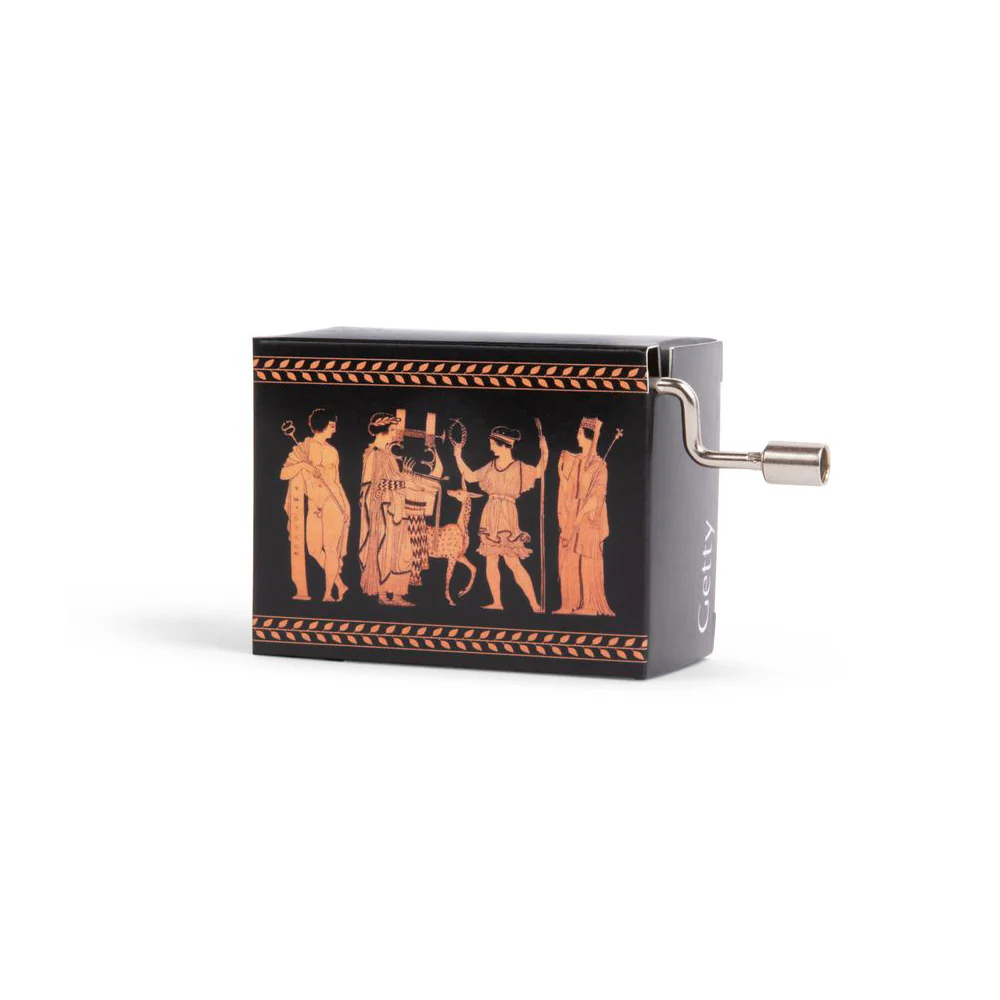
Art and music combine in this charming music box. The outer paper box features a detail from a Lucanian Red-Figure Volute-Krater in the J. Paul Getty Museum's collection. Inside, a high-quality sound mechanism is mounted on a resonance board for sound quality. The melody "Rigoletto" by Giuseppe Verdi plays when the hand crank is turned.
- Box dimensions: 2.25 inches x 1.75 x 1.25 inches
- Made in China
- Item #: GMB11
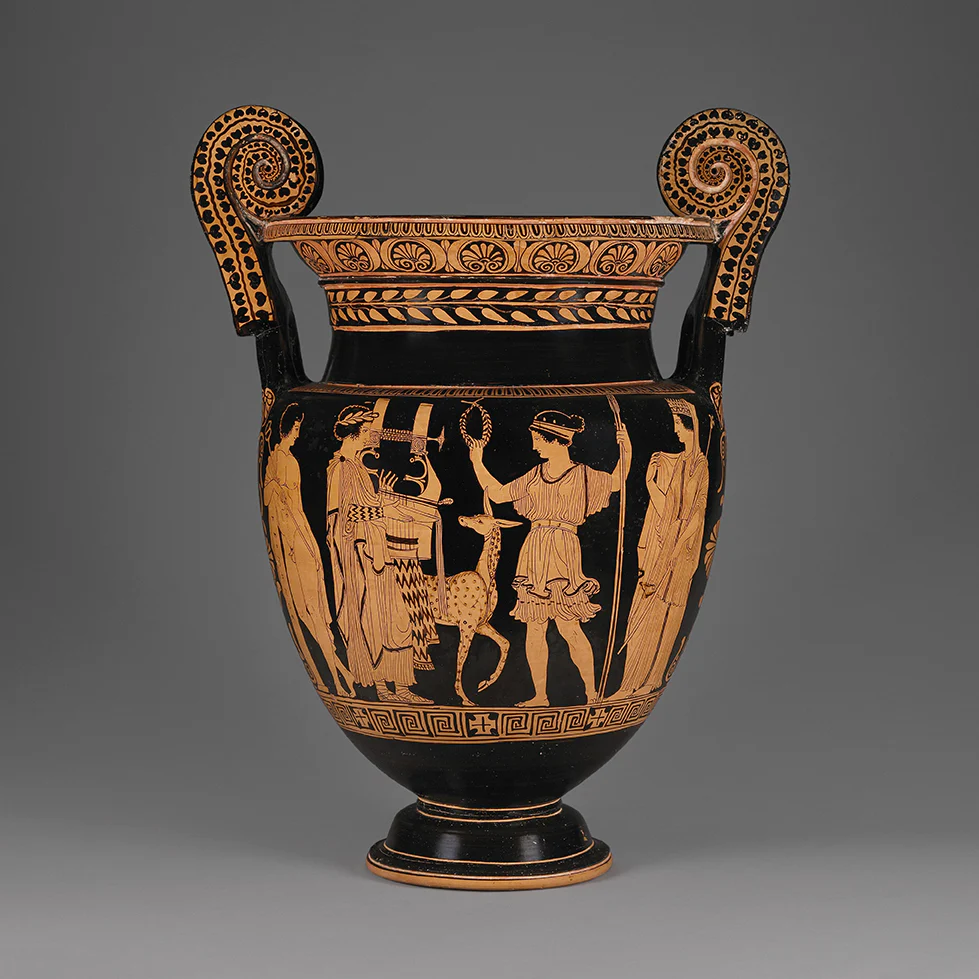
A gathering of deities decorates the front of this red-figure volute-krater (mixing bowl), made in a Greek colony in the region of Lucania in southern Italy. The twin gods Apollo and Artemis occupy the center of the scene. Apollo holds a kithara, denoting his role as god of music, and Artemis, the goddess of the hunt, is accompanied by her sacred deer. Their mother Leto stands at the right. On the left, the god Hermes leans on a pillar inscribed with his name. Two pairs of youths stand conversing on the back of the vase.
The volute-krater was a large serving vessel used to mix wine and water at a symposium or drinking party. Large figure-decorated symposium vessels like this one began to be produced in Southern Italy from the late fifth century BCE.
Attributed to the Palermo Painter (Greek, (South Italian, Lucanian), active about 430 - about 400 BCE)
J. Paul Getty Museum 85.AE.101
Copyright 2023 J. Paul Getty Trust
More Images
Roman Red Figure Scene Music Box
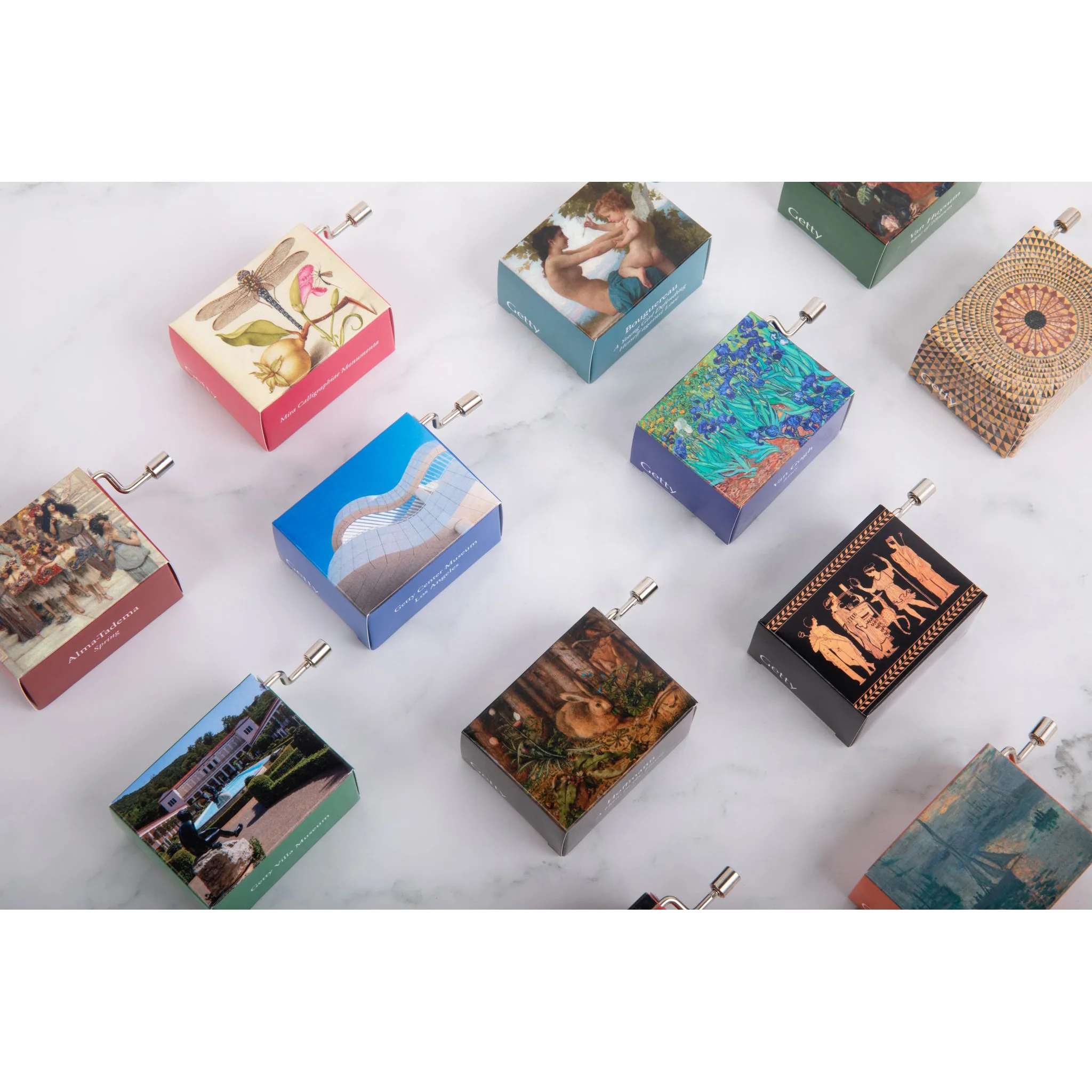
Art and music combine in this charming music box. The outer paper box features a detail from a Lucanian Red-Figure Volute-Krater in the J. Paul Getty Museum's collection. Inside, a high-quality sound mechanism is mounted on a resonance board for sound quality. The melody "Rigoletto" by Giuseppe Verdi plays when the hand crank is turned.
- Box dimensions: 2.25 inches x 1.75 x 1.25 inches
- Made in China
- Item #: GMB11
A gathering of deities decorates the front of this red-figure volute-krater (mixing bowl), made in a Greek colony in the region of Lucania in southern Italy. The twin gods Apollo and Artemis occupy the center of the scene. Apollo holds a kithara, denoting his role as god of music, and Artemis, the goddess of the hunt, is accompanied by her sacred deer. Their mother Leto stands at the right. On the left, the god Hermes leans on a pillar inscribed with his name. Two pairs of youths stand conversing on the back of the vase.
The volute-krater was a large serving vessel used to mix wine and water at a symposium or drinking party. Large figure-decorated symposium vessels like this one began to be produced in Southern Italy from the late fifth century BCE.
Attributed to the Palermo Painter (Greek, (South Italian, Lucanian), active about 430 - about 400 BCE)
J. Paul Getty Museum 85.AE.101
Copyright 2023 J. Paul Getty Trust
Product Information
Product Information
Shipping & Returns
Shipping & Returns
Description
Art and music combine in this charming music box. The outer paper box features a detail from a Lucanian Red-Figure Volute-Krater in the J. Paul Getty Museum's collection. Inside, a high-quality sound mechanism is mounted on a resonance board for sound quality. The melody "Rigoletto" by Giuseppe Verdi plays when the hand crank is turned.
- Box dimensions: 2.25 inches x 1.75 x 1.25 inches
- Made in China
- Item #: GMB11
A gathering of deities decorates the front of this red-figure volute-krater (mixing bowl), made in a Greek colony in the region of Lucania in southern Italy. The twin gods Apollo and Artemis occupy the center of the scene. Apollo holds a kithara, denoting his role as god of music, and Artemis, the goddess of the hunt, is accompanied by her sacred deer. Their mother Leto stands at the right. On the left, the god Hermes leans on a pillar inscribed with his name. Two pairs of youths stand conversing on the back of the vase.
The volute-krater was a large serving vessel used to mix wine and water at a symposium or drinking party. Large figure-decorated symposium vessels like this one began to be produced in Southern Italy from the late fifth century BCE.
Attributed to the Palermo Painter (Greek, (South Italian, Lucanian), active about 430 - about 400 BCE)
J. Paul Getty Museum 85.AE.101
Copyright 2023 J. Paul Getty Trust